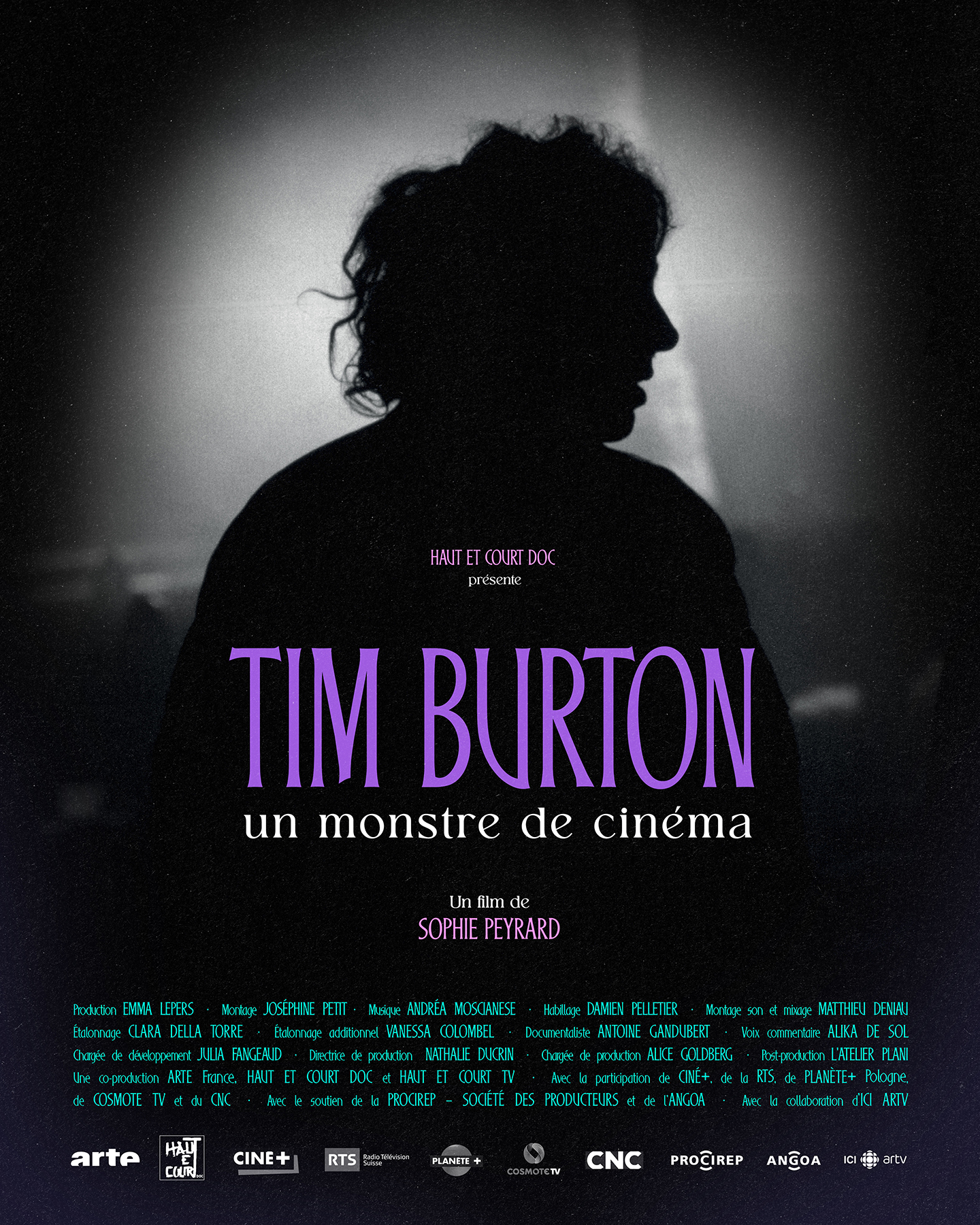
Poésie gothique, humour mordant et amour des marginaux : retour sur les cinq décennies de carrière de Tim Burton, génie de l’étrange dont les films, intimes ou blockbusters, offrent un refuge aux laissés-pour-compte d’une société normative.
https://www.arte.tv/fr/videos/121325-000-A/tim-burton-un-monstre-de-cinema/
Avec ce docu, j’ai voulu comprendre ce qu’il y a derrière la silhouette du « génie gothique » : un type un peu maladroit, pas à sa place, qui dessine pour ne pas exploser et qui, malgré le succès, n’a jamais vraiment cessé de se sentir en décalage. Tim Burton nous tend un miroir où la bizarrerie devient une forme de beauté. Dans ses films, les monstres sont doux, les héros mal fichus, les freaks ont le dernier mot. Le documentaire suit cette ligne-là, entre ses dessins, ses débuts chez Disney, ses figures de l’ombre et ses propres mots. L’idée n’était pas d’en faire une légende, juste tenter de cerner un peu mieux l’homme derrière les images.
——–
Tim Burton, Monsters Within is a portrait of one of the most singular filmmakers of our time, who explores the wounds of childhood and the world of fantasy through strange, marginal characters rejected by a society that values perfection. To watch his films is to discover his self-portrait, but also to question our own “monstrosity”.
Right from the start, with Vincent (1982), Pee-Wee’s Big Adventure (1985) and Beetlejuice (1988), Tim Burton created a unique world, both strange and funny, where creatures disturb the social and moral order. These monsters populate his most personal films, such as Edward Scissorhands, in which a scissorhands hero struggles to fit in, or Sleepy Hollow, with its decapitated knights. They can also be found in Hollywood works such as the Batman series, which revisits the figure of the superhero, or Charlie and the Chocolate Factory, with a disturbing Willy Wonka. Burton’s monsters are not mere extras, but real heroes. Those considered “abnormal” are presented without artifice or embarrassment, because Burton films them as if they were normal. These characters reflect the director himself, an artist who identifies with those who live marginalized lives.

 Sophie PEYRARD